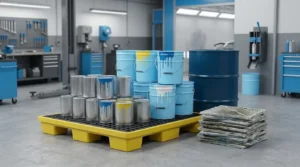
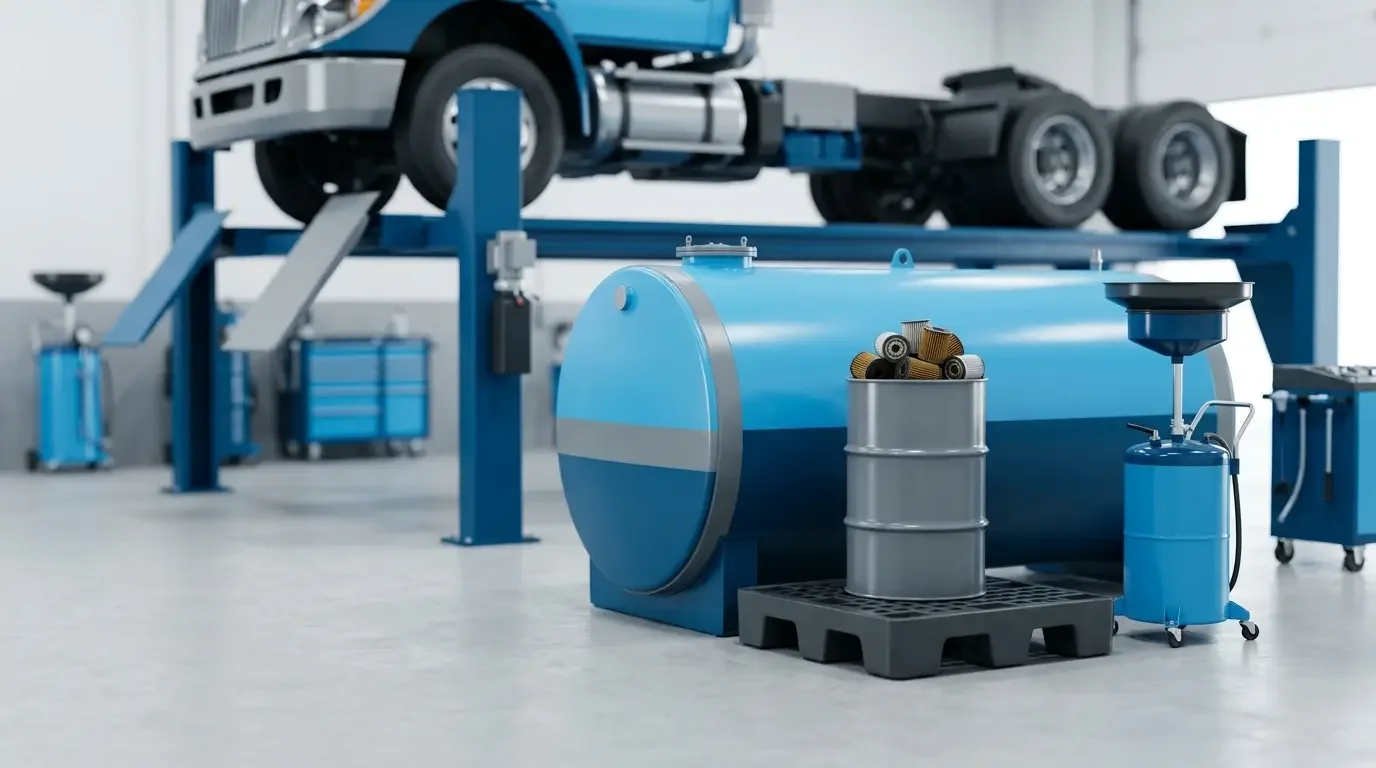
Used oil is generated by almost every business with vehicles, machinery, or hydraulic equipment. Fleet operators, repair shops, manufacturers, construction companies, and facilities maintenance teams all produce it, often in large volumes.
Federal rules treat used oil differently from hazardous waste. When it is managed correctly and recycled, used oil follows a simpler set of standards. When it is mixed with other wastes or mismanaged, it can become a hazardous waste with all the cost and obligations that come with it.
What Counts as Used Oil
Used oil is any oil refined from crude oil or any synthetic oil that has been used and, as a result of that use, is contaminated by physical or chemical impurities. Common examples include:
- Engine oil, transmission fluid, and gear oil
- Hydraulic fluid and compressor oil
- Metalworking fluids and cutting oils
- Heat transfer and turbine oils
- Refrigeration oils
Products that are not used oil include antifreeze, brake fluid in many cases, solvents, gasoline, and diesel fuel, even though they are often generated in the same shop. These have their own waste determinations.
The Used Oil Management Standards
The federal used oil rules are in 40 CFR Part 279. For businesses generating used oil, the key requirements are:
- Store used oil in tanks or containers that are in good condition and not leaking
- Label containers, tanks, and fill pipes with the words “Used Oil”
- Respond to releases by stopping the release, containing it, cleaning it up, and repairing or replacing leaking equipment
- Use transporters that have an EPA identification number for off-site shipments
- Do not use used oil as a dust suppressant or apply it to roads
Generators may self-transport small quantities, generally up to 55 gallons at a time, to a used oil collection center or aggregation point under specific conditions. State rules may add requirements.
The Mixing Problem
The most important rule about used oil is the one that is easiest to break. Mixing used oil with hazardous waste generally makes the mixture a hazardous waste. A drum of used oil that receives a few gallons of spent solvent is no longer managed under the used oil standards.
The 1,000 ppm Halogen Rule
Used oil containing more than 1,000 parts per million of total halogens is presumed to have been mixed with a listed halogenated hazardous waste, such as chlorinated solvents. This is called the rebuttable presumption.
You can rebut the presumption by showing that the used oil does not contain significant concentrations of listed halogenated hazardous constituents. Without that showing, the oil is managed as hazardous waste. Haulers commonly test incoming loads for halogens, and a failing test can turn a routine pickup into an expensive hazardous waste shipment.
The way to avoid this is to keep chlorinated solvents, brake cleaners, and degreasers out of used oil containers entirely.
Used Oil Filters
Used oil filters that are not terne-plated are exempt from hazardous waste regulation if they are properly drained. Accepted draining methods include puncturing the filter dome and hot-draining, hot-draining and crushing, dismantling and hot-draining, or another equivalent method. Hot-draining for at least 12 hours is the generally accepted standard.
Drained filters are commonly recycled as scrap metal. Many states have their own rules for oil filters, including landfill bans, so check before disposing of them.
Oily Rags, Absorbents, and Sludge
Absorbents and rags used to clean up used oil are generally subject to the used oil rules if they are burned for energy recovery, and to a waste determination if they are disposed of. Tank bottoms and sludge from oil storage also need characterization. State rules vary considerably for these materials.
Used Oil Spills
Spills of used oil must be stopped, contained, and cleaned up. Spill response materials should be kept near storage areas. Larger spills may trigger reporting obligations under other programs, including the Clean Water Act if oil reaches a waterway. Facilities that store oil above certain volumes may need a Spill Prevention, Control, and Countermeasure plan.
Keep Used Oil a Recyclable Stream
At hazwastedirect.com, used oil and related streams are collected by permitted transporters, tested where needed, routed to recycling, and documented on every pickup. When contamination has turned oil into hazardous waste, we characterize it and manage it under the correct rules.
Contact our team today for a fast quote and compliant hazardous waste disposal across all 50 states.