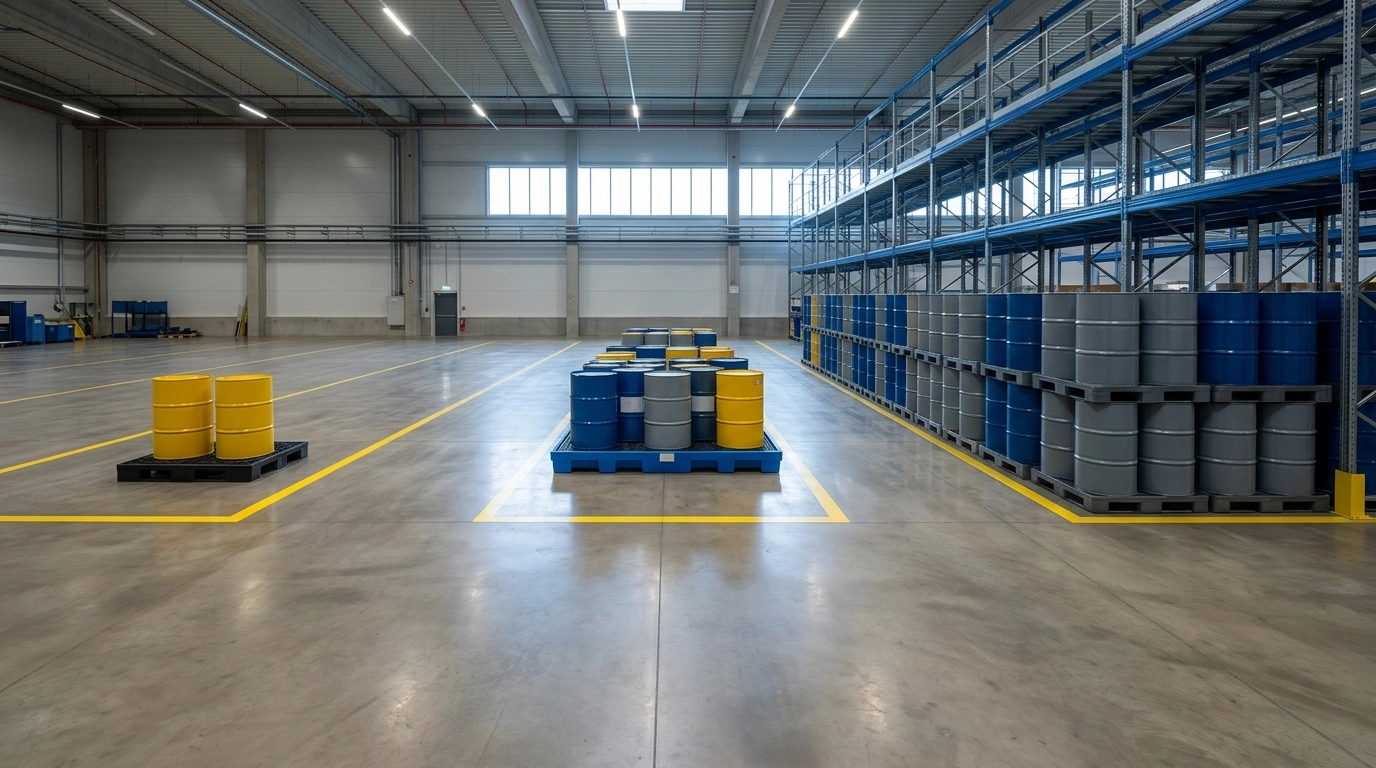
Generator status is the single variable that sets almost everything else about your hazardous waste program. It determines how long you can hold waste on site, what training your staff need, whether you must have a written contingency plan, and what you report to regulators. It is also measured monthly, which means it is not a permanent attribute of your facility.
Three Categories, Measured by Calendar Month
Your category is set by how much hazardous waste you generate in a calendar month, not by your size, your industry, or how much you ship.
Very Small Quantity Generator
No more than 100 kilograms of non-acute hazardous waste per month, and no more than 1 kilogram of acute hazardous waste. One hundred kilograms is roughly half a 55-gallon drum of most liquids, which is less than people assume.
Small Quantity Generator
More than 100 but less than 1,000 kilograms of non-acute hazardous waste per month, staying within the acute limits.
Large Quantity Generator
1,000 kilograms or more of non-acute hazardous waste per month, or more than 1 kilogram of acute hazardous waste in a month. That acute threshold is the one that catches facilities off guard, because a single small container of a P-listed chemical can push a facility into the highest category.
If you still see the term Conditionally Exempt Small Quantity Generator in your procedures, those documents predate the Generator Improvements Rule, which replaced it with Very Small Quantity Generator. That is a signal your program documentation needs a review.
What Changes With Category
- Accumulation time: LQGs have 90 days, SQGs have 180 days, extended to 270 days where the receiving facility is 200 miles or more away, and VSQGs have no time limit but are capped on quantity held on site
- Personnel training requirements, which are formal and documented for LQGs
- Contingency planning and emergency arrangements, most extensive for LQGs
- Weekly inspections of central accumulation areas
- Biennial reporting for LQGs
- Whether an EPA identification number is required
Your Category Can Change Month to Month
Because the count is monthly, a facility that normally sits comfortably as an SQG can become an LQG in a single month by doing a lab cleanout, decommissioning a line, or clearing out a chemical storage room that has been ignored for years.
The regulations anticipate this. The episodic generation provisions allow a VSQG or SQG to manage waste from one planned or unplanned event per year without being pushed into a higher category, provided the conditions are met. That includes having an EPA identification number, notifying EPA at least 30 days before a planned event or within 72 hours of an unplanned one, and completing the event within the allowed window.
The mistake is doing the cleanout first and reading the rule afterward. If you know a project is coming, the notification is a form. If you have already generated the waste, it is a violation.
What Does Not Count Toward Your Total
This is where real money sits. Waste managed under the universal waste rules and used oil managed under its own standards generally do not count toward your monthly hazardous waste generation total.
For a facility near a threshold, moving lamps, batteries, and other eligible streams into a properly run universal waste program can be the difference between SQG and LQG status, with everything that follows from it. It is a compliance decision with a direct and recurring cost effect.
Common Mistakes
- Counting shipments instead of generation, when the rule measures what you generate in the month
- Forgetting that acute hazardous waste has its own much lower threshold
- Treating the category as fixed and never recalculating after a process change
- Running a cleanout without checking the episodic generation conditions first
- Managing eligible universal waste as hazardous waste and inflating the monthly count for no reason
Know Your Category Before You Need To
At hazwastedirect.com, we work with generators in every category, from single drums to full truckloads, with pickup scheduled against your accumulation deadlines and full compliance documentation on every shipment.
State requirements can be stricter than the federal baseline, so confirm what applies in your state. Contact our team today for a fast quote and compliant hazardous waste disposal across all 50 states.