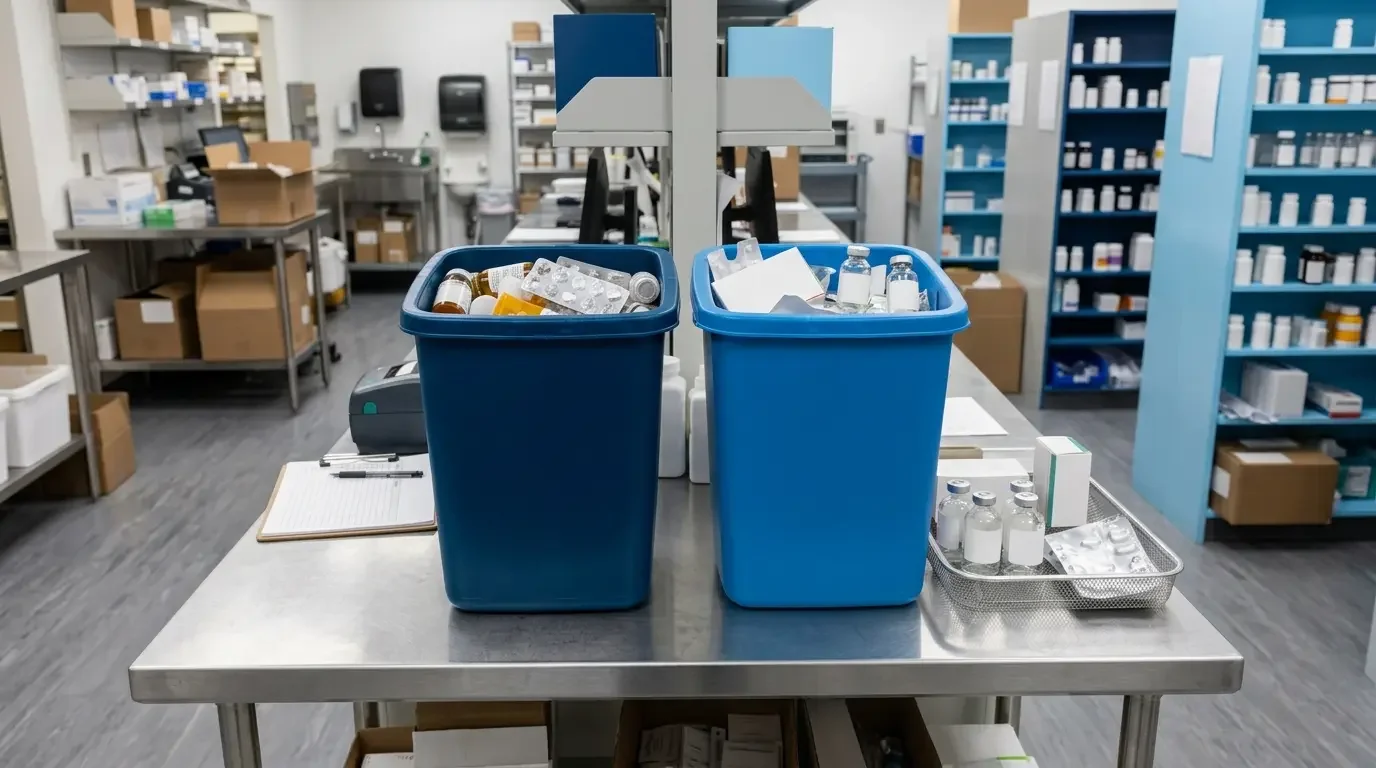
Pharmaceutical waste was one of the most awkward fits in the traditional hazardous waste rules. Hospitals and pharmacies generate small amounts of many different drugs, some of which are listed hazardous wastes, and the generator rules were written with factories in mind.
EPA addressed that with a set of management standards specific to hazardous waste pharmaceuticals, found in 40 CFR Part 266, Subpart P. This guide covers who the rule applies to, what it requires, and what it changed for healthcare facilities.
Who Subpart P Applies To
Subpart P applies to healthcare facilities and reverse distributors. Healthcare facilities include hospitals, clinics, physician and dental offices, pharmacies, long-term care facilities, veterinary clinics, and other operations that provide or dispense pharmaceuticals.
Healthcare facilities that are small or large quantity generators must manage their hazardous waste pharmaceuticals under Subpart P rather than the standard generator rules, where the state has adopted the rule. Very small quantity generators can opt in to Subpart P or continue with the VSQG requirements.
Because Subpart P is more stringent in some respects than earlier rules, states that are authorized to run their own programs must adopt it, and adoption has happened on different schedules. Check where your state stands.
Which Drugs Are Hazardous Waste Pharmaceuticals
A pharmaceutical is a hazardous waste pharmaceutical when it is discarded and is either listed on the P or U lists or exhibits a hazardous characteristic. Examples include warfarin, certain chemotherapy agents, and drugs with ignitable formulations such as some alcohol-based liquids and aerosols.
FDA-approved over-the-counter nicotine replacement therapies, such as patches, gums, and lozenges, were exempted from the P075 listing for nicotine when the rule was finalized. Other nicotine-containing products were not part of that exemption.
The Sewer Ban
The sewer ban is the provision that applies everywhere. Healthcare facilities and reverse distributors are prohibited from disposing of hazardous waste pharmaceuticals down a drain or toilet. This prohibition took effect nationwide on August 21, 2019, regardless of whether a state had adopted the rest of Subpart P.
Many facilities apply the same rule to all pharmaceuticals, hazardous or not, because sorting at the point of use is impractical and wastewater systems are not designed to remove pharmaceuticals.
Key Requirements for Healthcare Facilities
- Notify EPA or the state that the facility is operating under Subpart P, using the Site ID form
- Train personnel who handle hazardous waste pharmaceuticals on the procedures that apply to them
- Accumulate non-creditable hazardous waste pharmaceuticals in closed, structurally sound containers
- Label containers with the words “Hazardous Waste Pharmaceuticals“
- Accumulate on site for no more than one year, and be able to demonstrate how long waste has been held
- Ship non-creditable hazardous waste pharmaceuticals on a hazardous waste manifest to a permitted facility
- Keep shipping records for three years
Hazardous waste pharmaceuticals managed under Subpart P do not count toward the facility’s generator category. For many hospitals and pharmacies this was a significant change, since a small volume of P-listed drugs could previously push a facility into large quantity generator status.
Creditable and Non-Creditable Pharmaceuticals
Potentially Creditable
Prescription drugs that are in their original manufacturer packaging, unused or partially used, and eligible for manufacturer credit. These can be sent to a reverse distributor, which then manages them under its own Subpart P requirements.
Non-Creditable
Everything else, including partially used drugs not eligible for credit, residues, and contaminated materials. These are shipped as hazardous waste pharmaceuticals to a permitted treatment facility, usually for incineration.
Empty Containers and Residues
Subpart P includes specific standards for when a pharmaceutical container is considered empty. Stock bottles, dispensing bottles, vials, and unit-dose packaging that have had their contents removed through normal methods are generally considered empty, as are syringes that have been fully dispensed. Containers holding residues of acute hazardous waste pharmaceuticals, IV bags, and other containers have their own rules. Getting the empty container standard right can significantly reduce the volume shipped as hazardous waste.
DEA Controlled Substances
Some drugs are both hazardous waste pharmaceuticals and DEA controlled substances. Subpart P provides a conditional exemption for these when they are destroyed by a method DEA accepts as rendering them non-retrievable and combusted at a permitted facility. Coordinate both sets of requirements before establishing a disposal pathway.
Getting Pharmaceutical Waste Under Control
At hazwastedirect.com, we help healthcare facilities and pharmacies set up compliant collection for hazardous waste pharmaceuticals, manage manifested shipments to permitted facilities, and provide a Certificate of Disposal on every shipment.
Contact our team today for a fast quote and compliant hazardous waste disposal across all 50 states.