Solvent waste is the stream most facilities think they understand and most often manage incorrectly. The usual assumption is that solvent waste is a flammability issue, so it gets stored safely, kept away from ignition sources, and shipped as ignitable waste. That handles one of the two problems.
Spent Solvents Are Usually Listed, Not Just Characteristic
Many spent solvents used in degreasing, cleaning, and process applications appear on EPA’s F list, which covers hazardous wastes from non-specific sources. A listed waste is hazardous by definition, independent of whether it also exhibits a characteristic like ignitability.
That distinction matters because a listing follows the material in a way a characteristic does not. Characteristic waste can stop being hazardous if the characteristic is removed. A listed waste generally stays listed.
The Mixture Rule Is Where the Money Goes
Under the mixture rule, mixing a listed hazardous waste with a non-hazardous waste generally makes the entire resulting mixture a listed hazardous waste. There is no dilution exemption to work with.
In practice this is the single most expensive mistake in solvent management. A small amount of listed solvent poured into a drum of otherwise unregulated liquid converts the whole drum. A facility can multiply its disposal cost several times over through nothing more than a technician using the nearest available container at the end of a shift.
The countermeasure is dull and effective: labeled, dedicated containers at every point of generation, and training that explains why rather than just prohibiting.
Ignitability Sits on Top of the Listing
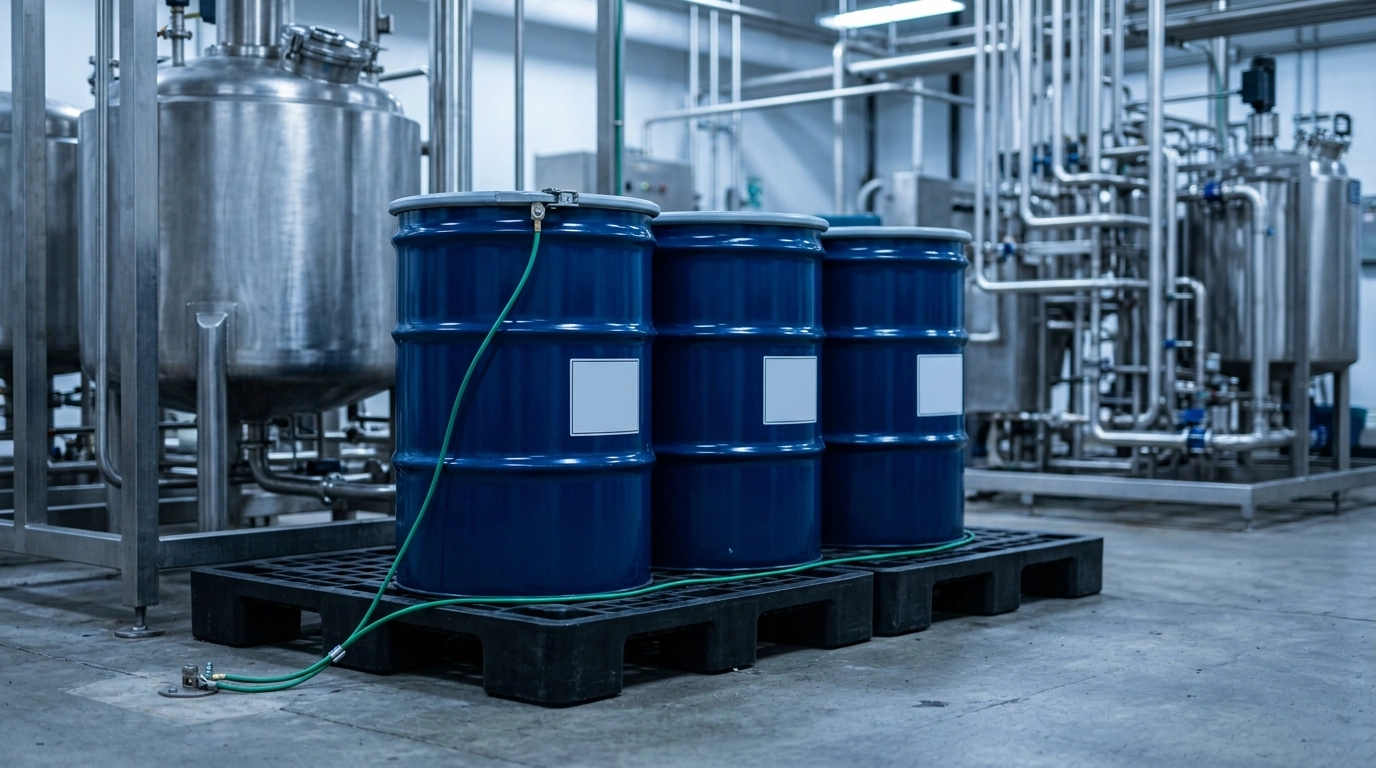
Most solvents are also ignitable, with flash points below 140 degrees Fahrenheit, which brings storage, grounding and bonding, container, and separation requirements alongside the RCRA obligations. A drum can be both a listed waste and a characteristic waste at the same time, and both sets of requirements apply.
Recovery Is Often Available and Usually Cheaper
Spent solvent does not automatically mean incineration. Depending on the stream, options include off-site solvent reclamation through distillation, which returns usable product to the market, and fuel blending, which recovers the energy value of the material in permitted industrial applications.
Which options are available depends entirely on the composition of your stream. Water content, dissolved solids, halogen content, and how many different solvents have been combined all determine whether a stream can be reclaimed or whether incineration is the only route. This is exactly why a disposal provider asks for a detailed profile instead of quoting on the word solvent.
What a Waste Profile Needs
- The process that generates the waste, described specifically
- Constituents and approximate percentages, including contaminants picked up in the process
- Flash point, pH, water content, and solids content
- Halogen content, which determines whether reclamation and fuel blending are available
- Container types, sizes, and volume generated per month
- Safety data sheets for the virgin products going into the stream
- Any analytical results you already hold
A precise profile produces a firmer quote and fewer surprises. A vague one produces a conservative quote with contingency built into it, because the receiving facility is pricing the uncertainty.
Common Mistakes
- Combining halogenated and non-halogenated solvents, which eliminates most recovery options and raises cost sharply
- Leaving funnels sitting in drum openings, which fails the closed container requirement
- Unlabeled or undated containers that cannot be tied to a determination
- Assuming solvent-contaminated wipes and rags follow the same rules as bulk liquid, when they have their own provisions
- Consolidating streams to reduce drum count without checking what that consolidation does to the waste codes
Get Your Solvent Streams Handled Properly
At hazwastedirect.com, solvent waste is profiled, routed to reclamation or permitted disposal based on the stream rather than a default, and documented with manifests, chain of custody, and a Certificate of Disposal on every shipment.
Contact our team today for a fast quote and compliant solvent waste disposal across all 50 states.