Batteries are the fastest-growing waste stream in most facilities and the one most likely to cause an actual emergency. Every other waste stream discussed in compliance training is a regulatory risk. A lithium cell in the wrong container is a fire risk, and it does not wait for an inspection to become a problem.
Fire Is the Practical Risk
Lithium-ion cells that are damaged, defective, overheated, or short-circuited can enter thermal runaway, a self-sustaining reaction that is extremely difficult to extinguish and that can propagate to neighboring cells. Improperly discarded lithium batteries are a well-documented cause of fires in collection containers, transfer stations, and waste vehicles.
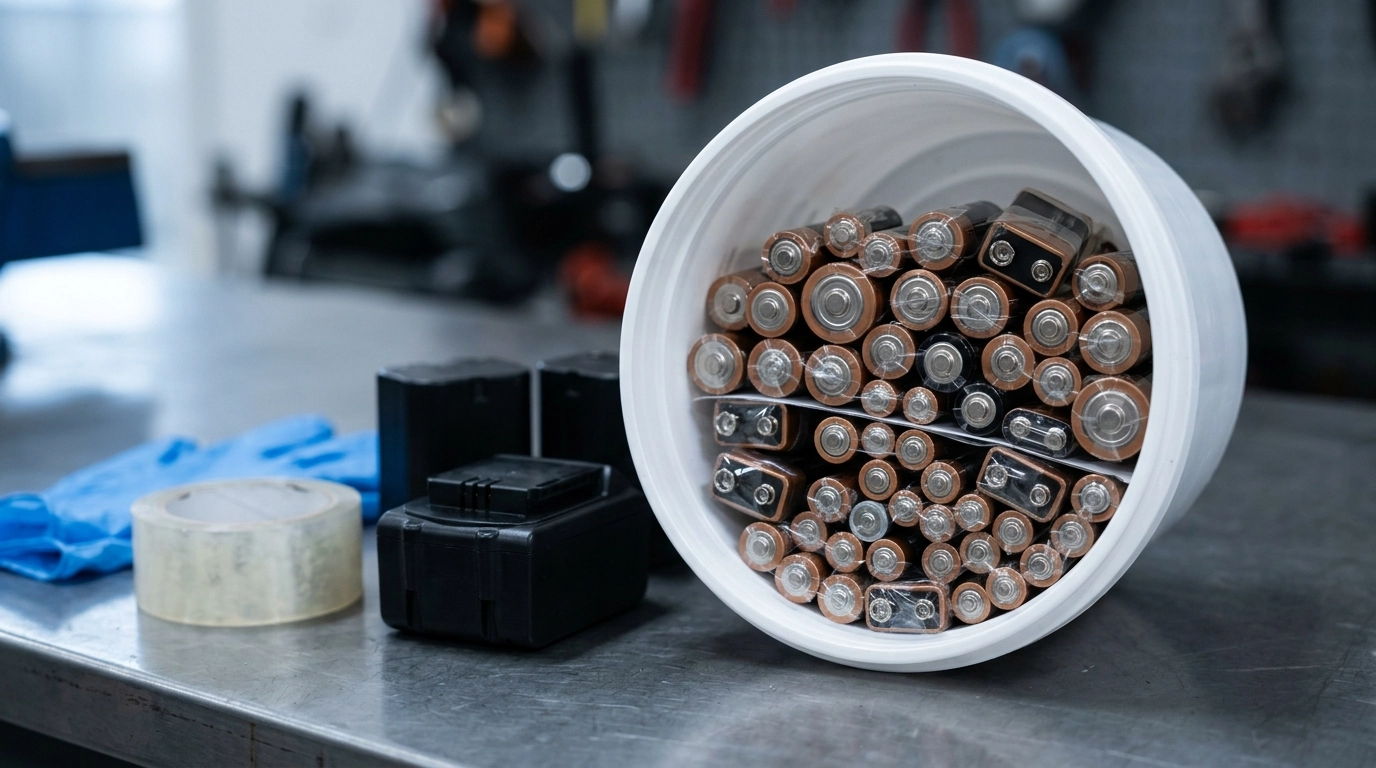
The most common ignition path in a workplace is trivially preventable: loose cells with exposed terminals thrown into a metal bin, where a terminal contacts metal or another cell and shorts. Taping terminals or bagging each cell individually removes most of the risk for the cost of a roll of tape.
Chemistry Determines Everything
Lead-Acid
Vehicle, forklift, and uninterruptible power supply batteries. These have a mature recycling infrastructure and high recovery rates. The main handling concerns are weight, acid, and keeping terminals from contacting each other in transit.
Lithium-Ion
Laptops, phones, power tools, e-bikes, robotics, backup systems, and increasingly large-format modules. Highest risk in the category and the one requiring the most care in packaging and transport.
Lithium Primary
Non-rechargeable lithium cells, common in meters, sensors, and backup memory. Different chemistry from lithium-ion, still reactive, still requires terminal protection.
Nickel-Cadmium and Nickel-Metal Hydride
Older tool packs and equipment batteries. Cadmium is the regulatory driver for NiCd.
Alkaline
Frequently not hazardous under federal rules, but several states regulate them and many businesses recycle them by policy. Confirm your state position rather than assuming.
Damaged, Defective, and Recalled Cells
A swollen, punctured, leaking, or recalled cell is not a normal battery, and it must not go into your standard collection container. These carry separate packaging and transport requirements and need to be isolated as soon as they are identified.
If you find one: isolate it away from combustibles, do not stack anything on it, do not attempt to discharge or repair it, and tell your disposal provider before pickup rather than at the dock. Arriving unannounced with damaged lithium cells will delay the entire collection.
Batteries Are Regulated in Transport as Well as in Disposal
Batteries are hazardous materials for shipping purposes, with requirements covering packaging, marking, labeling, and shipping papers. Those requirements sit on the shipper, which is you, and offering a shipment for transport requires trained personnel.
This is a common gap. A facility with a solid RCRA program can still be non-compliant on the transport side simply because nobody connected battery collection to hazardous materials shipping obligations.
What Good Battery Management Looks Like
- Segregate collection by chemistry rather than using one bin for everything
- Tape terminals or bag each cell individually to prevent short circuits
- Use non-conductive containers appropriate to the chemistry, not open metal drums for loose cells
- Site collection points away from combustible storage and exits
- Date containers so accumulation time can be demonstrated
- Never crush, puncture, incinerate, or submerge cells on site
- Flag damaged and recalled cells for separate handling at the point they are found
Documentation
Whether your batteries are managed as universal waste or as fully regulated hazardous waste, the shipment should produce records showing what left your site, in what quantity, to which facility, and what was done with it. Where recycling recovery is claimed for a sustainability report, the record needs to support the claim rather than approximate it.
Get Batteries Off Site Safely
At hazwastedirect.com, we handle battery collection and recycling across chemistries, including damaged and recalled cells requiring specialized packaging, with documentation and a Certificate of Disposal on every shipment.
Contact our team today for a fast quote and compliant battery disposal across all 50 states.