Universal waste is one of the few places in environmental regulation where the compliant path is also the cheaper one. It is a streamlined set of rules for common hazardous wastes that are generated widely and in small quantities across many kinds of facilities, and it exists specifically to keep those materials out of the trash by making them easier to handle correctly.
Facilities that do not use it end up managing lamps and batteries as fully regulated hazardous waste, which is more expensive, more paperwork, and can push them into a higher generator category for no benefit at all.
What Qualifies Federally
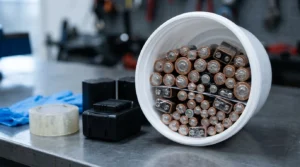
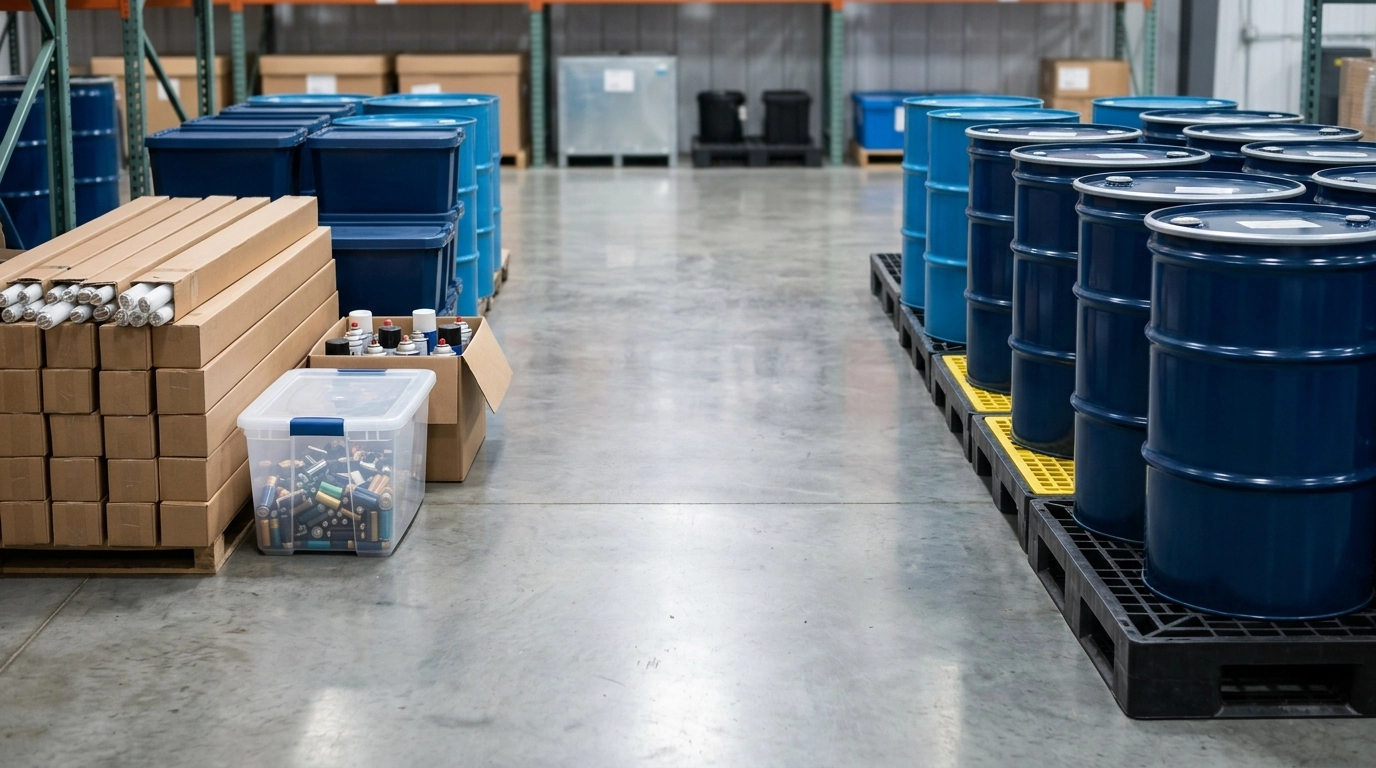
The federal universal waste categories are batteries, certain pesticides, mercury-containing equipment, lamps, and aerosol cans, which were added as a category in a 2019 rulemaking.
States can and do add categories beyond the federal list, and some states regulate more materials this way than others. Because universal waste is one of the areas where state programs diverge most, checking your state list is not optional.
Why It Matters Financially
Waste managed under the universal waste rules generally does not count toward your monthly hazardous waste generation total. For a facility sitting near a category threshold, that single fact can be the difference between small quantity generator and large quantity generator status.
Universal waste also carries a longer accumulation period, generally up to one year, and simpler handling and shipping requirements than fully regulated hazardous waste. Fewer shipments, less administration, and a lower generator category compound into real savings for a facility that runs the program properly.
Handler Categories
Universal waste handlers fall into two tiers based on how much universal waste is accumulated on site at any one time. A small quantity handler accumulates less than 5,000 kilograms in total, and a large quantity handler accumulates 5,000 kilograms or more. Large quantity handlers carry additional notification and recordkeeping obligations.
Note that the threshold is based on total accumulation on site at any time, across all universal waste categories combined, not on how much you generate per month.
What Still Applies
- A one-year accumulation limit, with the ability to demonstrate how long the material has been accumulating
- Containers and packaging that prevent releases and protect the material from damage
- Labeling that identifies the category, such as Universal Waste Lamps or Universal Waste Batteries
- Employee training appropriate to the handler category
- Immediate response to any release, and management of residues as hazardous waste where applicable
- Shipment to a destination facility, with tracking where required
Universal waste is not deregulated waste. It is regulated differently, with a simpler set of conditions attached, and the conditions still have to be met.
Common Materials in Practice
- Fluorescent tubes, compact fluorescents, and high intensity discharge lamps
- Batteries across most chemistries, subject to the specific rules for each
- Mercury thermostats, switches, manometers, and gauges
- Aerosol cans that still contain product or propellant
- Recalled, banned, or unused pesticides
Where Facilities Get It Wrong
- Sweeping broken lamps into the general trash, which puts mercury into an unpermitted stream
- Storing lamps for years with no way to demonstrate the accumulation start date
- Crushing lamps on site without checking whether it is permitted in that state
- Treating universal waste as unregulated and skipping labeling and containment
- Managing eligible material as fully regulated hazardous waste and inflating the generator category unnecessarily
Set Up Universal Waste Correctly
At hazwastedirect.com, we handle lamps, batteries, mercury devices, aerosols, and pesticides under the universal waste rules, with proper containment, scheduled collection, and documentation on every shipment.
State universal waste lists vary, so confirm what applies at your location. Contact our team today for a fast quote and compliant universal waste disposal across all 50 states.